2025 Michigan Property Taxes Overview

Blog Search
Subscribe
Get the latest Michigan Housing Reports delivered straight to your inbox!
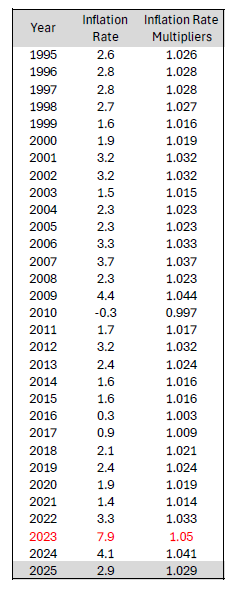
Michigan property taxes can change dramatically after a home sale. The post-pandemic market brought rising inflation and property values, triggering a key limit in Michigan’s tax law. In 2023, inflation hit 7.9%, and for the first time, the full 5% cap on taxable value increases went into effect. Buyers need to understand how property taxes reset and what that means for future bills.
The Rules: Headlee Amendment & Proposal A
Michigan’s Headlee Amendment limits how much tax revenue local governments can collect, forcing rate reductions when property values rise faster than inflation. Proposal A, passed in 1994, caps annual taxable value increases at the lesser of; inflation or 5%. While this cap generally protected homeowners from sharp tax hikes, it has now come into play due to high inflation. Inflation rates were 3.3% in 2022, 7.9% in 2023 (capped at 5%), 4.1% in 2024, and 2.9% in 2025. These figures determine how much a property’s taxable value can increase annually—unless it’s sold.
What Happens When a Property Sells
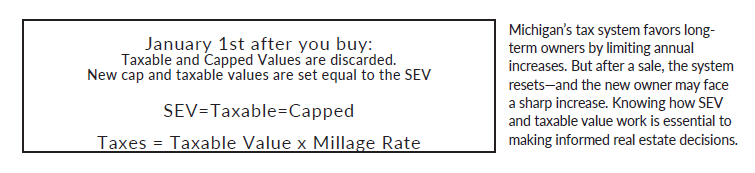
When a home sells, the capped value and taxable value are reset the following January 1st. The new owner’s taxable value becomes equal to the SEV(State Equalized Value)—half the home’s assessed market value. This often results in a significantly higher tax bill than what the seller was paying. From there, future increases are once again capped by inflation or 5%.
Taxable vs. Market Value: The Gap
From 2012 to 2025, Michigan property values increased by 196%. But capped taxable values for homeowners who didn’t move rose only 37.9%. This large gap explains why new buyers often pay much more in taxes than their neighbors.
Don’t Focus on the Wrong Numbers
Buyers should not compare their expected taxes to those of the seller or nearby homeowners. Instead, they should look at the current SEV and determine whether it reflects about 50% of the home’s true market value. If the SEV appears too high relative to the sale price, it may be worth discussing with the local assessor.

Demand Continues to Absorb Limited Supply
< 1 minute
The Washtenaw housing market continues to demonstrate remarkable resilience despite a persistent shortage of new listings. May new listings slipped 5% from April and remain 15% below last year’s pace, [...]
Limited Inventory Keeps Pressure on Buyers
< 1 minute
The Washtenaw County housing market continues to move through spring with buyer demand remaining stronger than overall sales activity would suggest. New listings remain well below last year’s pace, limiting [...]

Limited Supply Continues to Shape the Market
< 1 minute
The Washtenaw County housing market is moving through spring with buyer demand remaining strong, while limited inventory continues to constrain overall activity. Through the first quarter, new listings are down [...]
©2026 Max Broock. All rights reserved.